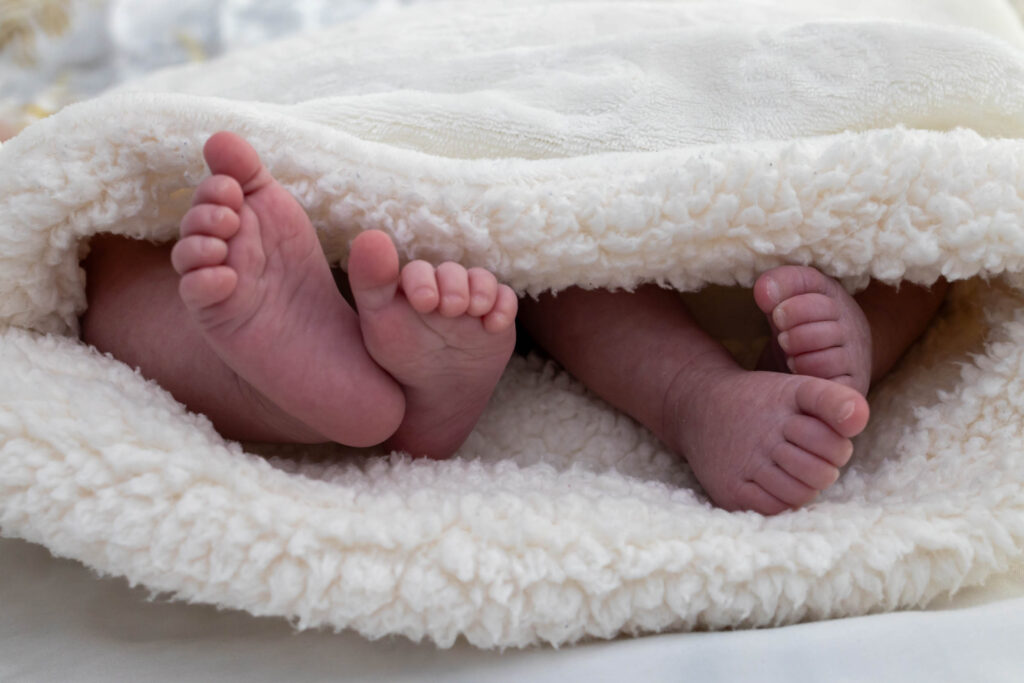

People love to tell you that having twins means “double the love.” And they’re right — the love is enormous, multiplied, and indescribable. But what they don’t see is everything that comes with it. The double crying. The double needs. The double pressure. The double emotional load that sits quietly on your shoulders from the moment they arrive.
Raising twins is beautiful, but it’s also brutal in ways most people will never understand. And the emotional side of raising twins — the guilt, the overwhelm, the identity shifts, the loneliness — is something twin parents often carry silently. You don’t want to complain. You don’t want to seem ungrateful. You don’t want to admit that sometimes the weight of it all feels heavier than you expected.
But you’re not alone. Every twin parent has felt these things, even if they don’t say them out loud.
This is the part of twin parenting that deserves to be spoken about honestly.
Why Twin Parenting Feels Emotionally Different
Every parent experiences exhaustion and self-doubt, but twin parents experience these emotions in layers. Everything happens twice, at the same time, with no pause in between. You’re not just caring for two babies — you’re managing two emotional worlds, two developmental paths, two sets of needs that rarely line up neatly.
From the moment your twins arrive, you learn what it means to divide yourself. Singleton parents get to give one baby their full attention. Twin parents learn to split themselves constantly — 50/50, 60/40, 80/20 — whatever the moment demands. Even when you’re doing your absolute best, it can feel like you’re failing both.
And then there’s the mental load. Your brain never fully shuts off. Even when both babies are calm, your body stays alert because you know it can change in seconds. You’re always anticipating the next cry, the next feeding, the next meltdown. Your nervous system rarely gets a chance to reset.
This constant state of “on” affects everything — your mood, your patience, your confidence, your sense of self. It’s not because you’re weak. It’s because the intensity of caring for two infants at once leaves very little room for anything else.
This level of constant intensity is also why so many twin parents hit a wall later on — not because they’re doing anything wrong, but because the load never really lets up. I talk more about that in my guide on twin‑parent burnout after the newborn phase, and why it shows up so suddenly.
The Guilt No One Warns You About
Twin mom guilt is a unique kind of guilt — deeper, sharper, and more persistent than you expect. It shows up in moments you didn’t see coming.
There’s the guilt of not being able to give them equal attention. One baby always waits. One baby always gets the shorter cuddle. One baby always gets the second bottle. Even when you know it’s unavoidable, it still hurts to see one child watching you while you tend to the other.
There’s the guilt of not having enough of yourself to go around. You love them fiercely, but you’re human. Your energy, patience, and emotional bandwidth have limits. And when you hit those limits, guilt creeps in — as if needing rest makes you a bad mother.
There’s the guilt of missing your old life. You miss your freedom, your hobbies, your spontaneity, your quiet. You miss the version of yourself who wasn’t stretched so thin. And then you feel guilty for missing her, as if longing for your old identity means you don’t appreciate your new one.
And then there’s the guilt for feeling overwhelmed at all. People love to remind you how “lucky” you are. How “blessed.” How “special” it is to have twins. And yes — it is special. But gratitude doesn’t cancel out exhaustion. Joy doesn’t erase frustration. Love doesn’t eliminate burnout.
You’re allowed to feel both.
The Overwhelm That Builds Quietly
Twin parenting overwhelm isn’t always loud. It’s not always a dramatic meltdown or a moment of crisis. More often, it’s the slow accumulation of tiny stressors that stack up day after day.
It’s the interrupted sleep that never fully recovers. It’s the constant noise, the constant touching, the constant demands. It’s the decision fatigue from managing two schedules, two personalities, two sets of needs. It’s the pressure to keep the household running while also keeping yourself from falling apart. It’s the lack of personal space — physical, mental, emotional. It’s the lack of time to recover before the next wave hits.
This kind of overwhelm is quiet but powerful. It’s the kind that makes you forget what day it is. The kind that makes you cry in the bathroom for 30 seconds before someone calls your name again. The kind that makes you feel like you’re running a marathon without ever reaching the finish line.
And the hardest part? You rarely get a break long enough to truly reset.
If sleep is still an issue, Surviving Twins When You’re Running on Broken Sleep will help.
The Loneliness No One Talks About
Twin parents often feel isolated — even when surrounded by people. It’s a strange kind of loneliness, one that comes from being in a situation few people truly understand.
Singleton parents try to empathize, but they don’t fully grasp what it’s like to feed two babies at once, or soothe two crying infants simultaneously, or manage two toddlers melting down in stereo. They don’t understand the logistics of leaving the house, the emotional load of dividing yourself, or the exhaustion that comes from being needed by two children every minute of the day.
Friendships become harder to maintain. You’re not ignoring people — you’re surviving. But when you cancel plans, forget to reply, or can’t commit to anything, relationships naturally shift. It’s not your fault. It’s the season you’re in.
And then there’s the loneliness that comes from not wanting to ask for help. You need more help than other parents, and sometimes that makes you feel like a burden. But needing help doesn’t make you weak. It makes you human.
How Twin Parenting Affects Your Relationship
Twins don’t just change you — they change your partnership. You and your partner become a team out of necessity. You divide tasks, you trade shifts, you communicate constantly about logistics. But teamwork doesn’t always equal connection.
Conversations become survival-based. You talk about feedings, naps, diapers, schedules — but not about feelings, dreams, fears, or each other. Emotional intimacy gets pushed aside because there’s simply no time or energy left for it.
Resentment can build quietly, especially when one partner sleeps more, or works outside the home, or carries more of the mental load. It’s normal. It’s common. And it’s fixable — but only when you acknowledge it.
Intimacy changes too. Not just physically, but emotionally. You’re touched out. You’re overstimulated. You’re mentally drained. It doesn’t mean your relationship is broken. It means you’re overwhelmed.
Finding Yourself Again (Yes, It’s Possible)
You don’t have to wait until your twins are older to feel like a person again. You can start now — slowly, gently, realistically.
It begins with reclaiming tiny pockets of time. Not hours. Not even thirty minutes. Sometimes it’s three minutes of breathing, five minutes of stretching, ten minutes of silence in the car. A shower with the door closed. A cup of tea without multitasking. These small moments matter. They rebuild you in ways you don’t notice at first.
It continues with letting go of the idea that everything must be equal. Your twins don’t need identical experiences. They need to feel loved, safe, and seen — and you can meet those needs in different ways for each child. “Equal” is impossible. “Enough” is what matters.
It also means releasing the myth of the supermom. You don’t need to do everything. You don’t need to be everything. You don’t need to hold the world together. You need support. You need rest. You need grace.
Asking for help is not a failure. It’s a strategy. Twin parents need more help than singleton parents — that’s not a character flaw, it’s simple math.
Finding yourself again happens in layers. You reconnect with old hobbies. You rediscover what brings you joy. You create new routines. You set boundaries. You say no more often. You say yes to things that fill you. Your identity isn’t lost — it’s evolving.
And as your twins grow, you’ll find moments to connect with each of them individually. These one-on-one moments don’t have to be big or elaborate. Even ten minutes can strengthen your bond, ease your guilt, and remind you that you’re doing better than you think.
Along the way, celebrate the small wins. Twin parenting is made of micro-victories — both napped, you drank your coffee warm, you handled a meltdown calmly, you got outside, you survived the day. These moments matter more than you realize.
What You Need to Hear Today
You are not failing. You are not doing it wrong. You are not supposed to have it all together.
Twin parenting is emotionally intense because it is intense.
But you are growing. You are adapting. You are becoming stronger in ways you don’t even see yet.
And your twins? They don’t need a perfect mom. They need you — the real, tired, loving, trying-every-day you.
That’s more than enough.
If this stage feels heavy and you’re craving more calm, connection, and practical tools for the emotional load of twin parenting, my book The Twin Toddler Years goes deeper into everything you’re feeling — with scripts, routines, and mindset shifts that actually help.