The first year with twins is full of lovely moments—and a lot of logistics. There are two babies to settle, two sleep spaces to prepare, and twice as many chances for a nighttime sheet change. We learned that the best sleep products for twins weren’t necessarily complicated. They were practical things that helped us make the most of our space and get through the bedtime routine with fewer extra steps.
Here are ten products that helped us prepare for sleep and make the first year feel a little more manageable. Every baby is different, so take what works for your family and check with your pediatrician if you have questions about sleep or gear.
Gear is only part of the story though. Once you’ve got everything in place, make sure to also check out Twin Sleep in the First 6 Months: The Ultimate Realistic Guide.
1. Mini cribs
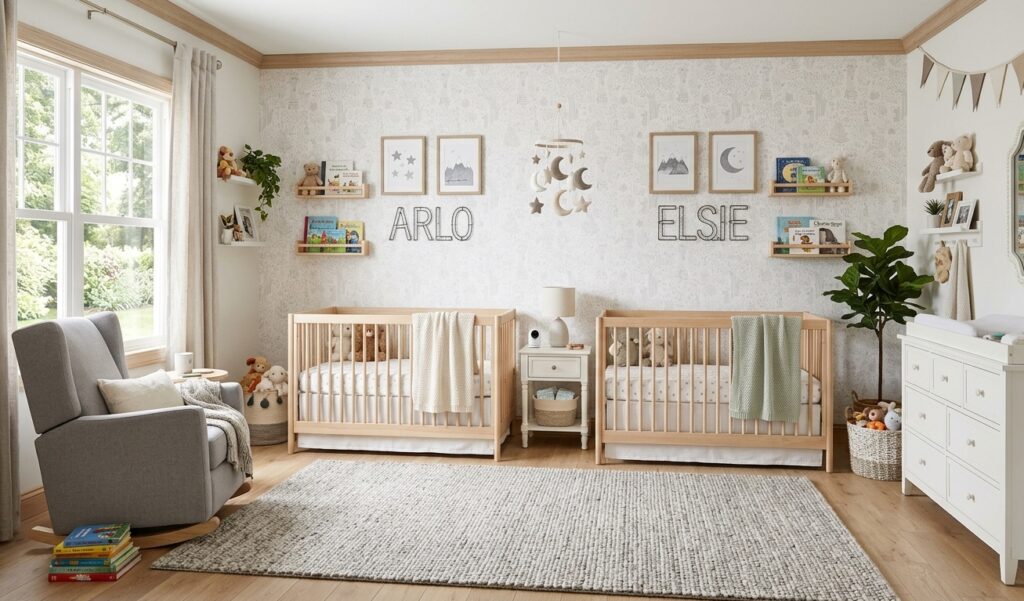
Space is precious when you’re setting up for twins. We liked the idea of mini cribs because they gave each baby a dedicated sleep space without taking up as much room as two full-size cribs. Choosing a mini crib also meant we could skip buying bassinets first and then replacing them with larger cribs later.
Before buying, measure the room and check how much clearance you’ll need to open doors, move around, and reach each crib. Mini cribs come in different sizes, so it’s important to make sure the mattress and sheets you buy are designed for the exact model. Follow the manufacturer’s instructions for assembly and use, and check that the crib meets current safety standards.
2. Mini crib mattresses
The mattress needs to fit the crib properly, with no gaps around the edges. We made sure to look for one made for the specific mini crib rather than assuming a mattress labeled “mini” would fit every model. That little compatibility check matters when you’re buying two of everything.
For sleep, the crib should have a firm, flat mattress and a fitted sheet. Keep pillows, blankets, toys, and other soft items out of the sleep space. The CDC’s safe sleep guidance recommends placing babies on their backs for every sleep and using a firm, flat surface covered by a fitted sheet.
3. Mini crib mattress protectors
A mattress protector can help keep the mattress clean through leaks, spit-up, and all the other little messes that seem to happen at the least convenient time. With twins, having a protector for each crib meant we could deal with a mess and get the bed ready again without adding a bigger cleanup to an already busy night.
Check that any protector is specifically made for the mattress and fits securely. For sleep, keep the crib surface simple: use only the fitted sheet recommended for the mattress and follow the crib and mattress manufacturers’ instructions. Avoid adding loose or padded layers under the baby.
Shop the mini crib mattress protector
4. Mini crib sheets
Extra sheets were one of those unglamorous purchases that made a real difference. When a sheet needed changing, having a clean one ready meant we could remake the crib quickly and get back to settling everyone. We kept spares somewhere easy to reach instead of discovering at bedtime that the last clean sheet was in the laundry.
The key is fit. Mini crib sheets aren’t all interchangeable, so check the mattress dimensions and buy sheets made for that size. A fitted sheet should stay snugly in place, with no loose fabric.
5. Sleep sacks
Sleep sacks gave us a wearable option for keeping babies comfortable at bedtime. Depending on the room temperature and the product’s guidance, we dressed the babies in sleepers or onesies underneath. Having a few different clothing layers made it easier to adjust without relying on loose blankets in the crib.
Check the sleep sack’s size, age range, and instructions before using it. Avoid overdressing babies, and watch for signs that they may be too warm. Sleep sacks are different from weighted products or swaddles, so use only products appropriate for your baby’s age and stage. The American Academy of Pediatrics explains that wearable blankets can be used in place of loose blankets as part of a safe sleep setup in its parent guide to safe sleep.
6. Pacifiers
Pacifiers became one of the small things we liked having close by during the bedtime routine. We kept a few clean ones in a convenient spot, which saved us from searching around when we were tired and one had disappeared into the bedding or the other room.
Choose pacifiers that are age-appropriate and follow the cleaning and replacement instructions. If you use one for sleep, don’t attach it to your baby’s clothing, neck, or crib. If you have questions about introducing a pacifier—especially if you’re nursing—your pediatrician can offer advice for your situation.
7. Travel sound machine
A travel sound machine was useful when we wanted to bring a familiar part of the bedtime routine along. It’s small enough to pack, and it can be handy for trips, visits, or naps away from home. A portable option doesn’t guarantee that babies will sleep in a new place, of course, but familiar cues can make the routine feel less unfamiliar for everyone.
We treated it as a convenience, not a substitute for a safe sleep space. Follow the device instructions for volume, placement, charging, and use around babies. For travel, we also tried to plan ahead so each baby had a safe, flat place to sleep.
8. Humidifier
A humidifier can be helpful when indoor air feels dry. We liked having one available, especially during seasons when the heat was running and the air in the house felt less comfortable. It’s one of those products that may be useful for some families and unnecessary for others, depending on the home and the time of year.
If you use one, follow the manufacturer’s directions for cleaning, water, and placement. Regular cleaning matters, and the unit should be kept out of reach of babies. We kept the sleep space clear and made sure cords and other equipment stayed away from the crib.
9. Blackout curtains
Blackout curtains helped us make the room darker for daytime naps and bedtime, especially when the sun was still up. They also made the sleep space feel more consistent when the schedule shifted or one baby needed to nap while the rest of the house was awake.
Measure the window before ordering and think about how the curtains will be installed. Make sure cords and curtain hardware are secured and out of reach. They don’t need to make the room pitch black to be useful; even reducing some of the daylight can make the room feel calmer.
10. Baby monitor
A baby monitor helped us check in on the babies from another room. With twins, it was useful to be able to see or hear what was happening without making a trip down the hall every time we heard a small noise. The features that matter most will depend on your home: some families want a simple audio monitor, while others prefer video or multiple-camera support.
Before buying, check the range, battery and power options, and whether it can support the setup you need for two babies. Follow the manufacturer’s guidance for placing cameras and securing cords. A monitor can help you keep an eye or ear on things, but it doesn’t replace safe sleep practices or an adult checking on the babies when needed.
What We’d Prioritize Again
For us, the most helpful products were the ones that made the room easier to use every day: compact cribs, correctly fitted mattresses and sheets, a few wearable sleep options, and simple tools for making bedtime more comfortable. Having backups—especially sheets and pacifiers—also helped reduce the number of small emergencies in the middle of the night.
Preparing for twins can make every purchase feel like a major decision. You don’t need to buy every sleep gadget at once. Start with two safe sleep spaces, the right mattresses and fitted sheets, and the basics that suit your home. You can add the rest as you learn what actually helps your family.
Affiliate disclosure: This article contains affiliate links. If you purchase through these links, I may earn a commission at no additional cost to you.
Need a little more support for the newborn stage?
The first year with twins can feel like a lot to figure out all at once. Our Twin Newborn Survival Guide offers practical support for navigating those early days.