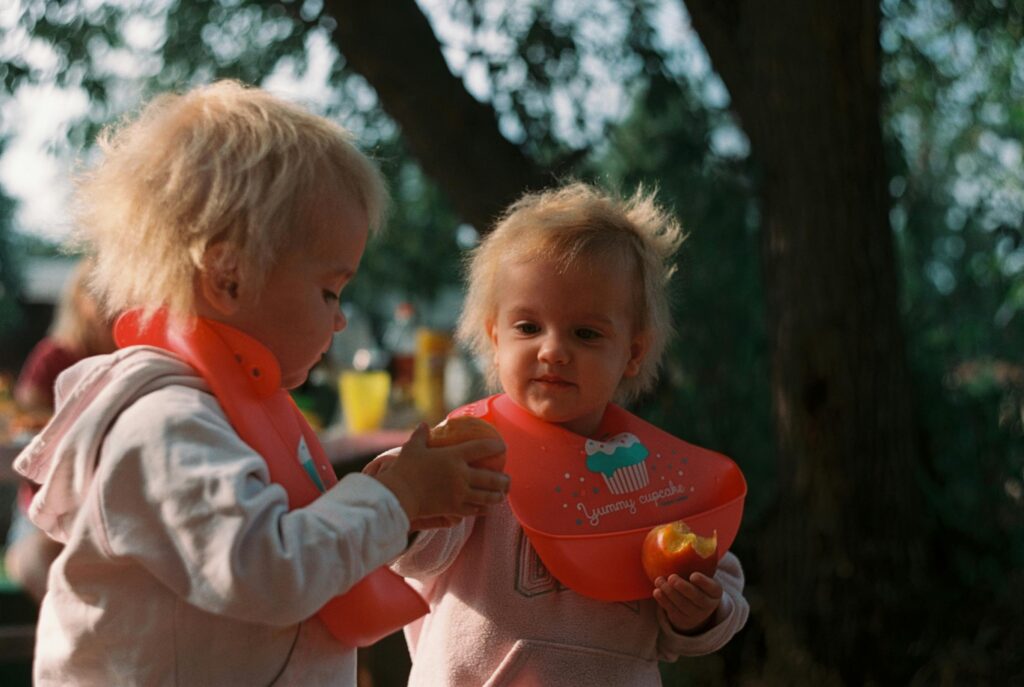
If you’re raising toddler twins, you already know how wildly different two children born on the same day can be — especially when one twin is a picky eater and the other eats absolutely everything in sight. They share a birthday, a home, a routine, and often even the same plate of food, yet somehow they can feel like they came from completely different planets. You look at them and think, How are you two the same age? How did you arrive here together? How do you have the same parents and the same environment and still react to food like you’re starring in two entirely different shows?
Nothing highlights those differences quite like mealtimes.
One twin eats everything. The other twin eats… air, vibes, and maybe three acceptable foods if the moon is in the right phase.
One twin happily tries new flavors, textures, and combinations — they’ll dip things, mix things, experiment with things, and sometimes even steal food off your plate. The other twin looks at a plate like it’s a personal betrayal, like you’ve served them a steaming pile of danger and disrespect.
One twin is curious. One twin is cautious. One twin is adventurous. One twin is deeply offended by the existence of peas.
And when one twin is a picky eater, the contrast becomes impossible to ignore. It’s not just a small difference — it’s a daily, visible, emotionally charged difference that shows up three times a day, every day, without fail. You can’t escape it. You can’t pretend it’s not happening. You can’t “just ignore it” the way well‑meaning people suggest, because the comparison is right there in front of you at every single meal.
Suddenly, something as simple as lunch becomes a mental load you didn’t expect. You’re not just feeding toddlers. You’re navigating:
- fairness
- nutrition
- frustration
- guilt
- comparison
- worry
- the fear of “messing it up”
And because you’re parenting twins, the contrast feels sharper, louder, and more intense than it would with siblings of different ages. If you had a three‑year‑old and a one‑year‑old, you’d expect differences. But when they’re the same age, the same size, sitting in the same high chairs, eating the same meal… it hits differently.
You start wondering:
- Why is one twin a picky eater and the other isn’t?
- Am I doing something wrong?
- Is this my fault?
- Should I be trying harder?
- Should I be backing off?
- Is the good eater getting ignored?
- Is the picky eater getting pressured?
- How do I keep this fair?
And then there’s the emotional whiplash of trying to support both children at the same time. You’re trying to celebrate the adventurous eater without making the picky eater feel inadequate. You’re trying to encourage the picky eater without making the adventurous eater feel invisible. You’re trying to keep the meal calm while your brain is spiraling about nutrients, habits, and long‑term eating patterns.
It’s a lot. It’s more than most people realize. And it’s one of the most common — and least talked‑about — challenges in twin parenting.
Because when one twin is a picky eater, you’re not just dealing with food preferences. You’re dealing with identity, temperament, sensory processing, developmental timing, and the emotional weight of comparison that twins naturally bring into the world.
You’re also dealing with the pressure of wanting to “get it right,” knowing that food is such a foundational part of childhood. You want to avoid power struggles. You want to avoid pressure. You want to avoid creating negative associations. You want to avoid turning mealtimes into a battleground.
But you also want your picky eater to eat something — anything — that isn’t beige.
And you want your adventurous eater to keep thriving without feeling like they’re being punished for being easy.
This is the tightrope twin parents walk every single day.
Here’s how to handle it without losing your mind, without creating pressure, and without accidentally turning mealtimes into a battleground.
Why One Toddler Twin Becomes a Picky Eater
Toddlers are wired for strong preferences, but twins amplify the contrast. When one twin eats well, the picky one stands out even more — not because they’re “worse,” but because the comparison is right in front of you at every meal.
Common reasons one toddler twin becomes picky:
- different sensory profiles
- different temperaments
- different hunger cues
- different developmental timelines
- different reactions to novelty
- different emotional thresholds
- different experiences with early feeding
And sometimes, the picky phase starts in babyhood — but toddlerhood is when it becomes unmistakable. Suddenly, the baby who ate purées without hesitation becomes the toddler who refuses anything green, anything mixed, anything touching, or anything that looks “wrong.”
If you’re noticing big differences between your twins in other areas too, you might find this helpful — Comparing Twins explains why their personalities can feel worlds apart.
This isn’t a reflection of your parenting. It’s a reflection of their wiring.
The Emotional Side No One Talks About
When one twin eats well and the other doesn’t, the emotional load hits you from both sides. And it’s not just about food — it’s about identity, fairness, and the pressure to “get it right.”
Guilt toward the picky eater
You worry they’re not getting enough nutrients. You worry you’re doing something wrong. You worry you’re reinforcing the pickiness. You worry they’ll fall behind. You worry you’re not offering enough variety. You worry you’re offering too much variety. You worry they’ll always be this way.
It’s a constant loop of second‑guessing.
Guilt toward the good eater
You worry they’re being ignored because they’re “easy.” You worry they’re getting less attention at meals. You worry they’ll start copying the picky behaviors. You worry they’ll feel pressured to be the “good one.” You worry they’ll resent the imbalance.
And then there’s the pressure of trying to keep mealtimes calm when you’re internally panicking about nutrition, fairness, and the long‑term impact of every bite.
If mealtimes aren’t the only place where one twin struggles more, you’re not alone — Is It Normal for One Twin to Sleep Worse Than the Other? breaks down why uneven needs are incredibly common.
This is the part of twin parenting no one prepares you for.
Fairness Doesn’t Mean Identical Plates
One of the biggest traps twin parents fall into is trying to make meals look equal. You want to be fair. You want to avoid favoritism. You want both twins to feel supported.
But fairness with toddler twins isn’t about identical plates — it’s about equal opportunity.
Fairness looks like:
- offering both twins the same foods
- allowing each child to respond differently
- respecting each child’s appetite
- avoiding pressure or comparison
- trusting that development unfolds at different speeds
Your picky eater isn’t “behind.” Your good eater isn’t “better.” They’re just different.
And different doesn’t mean wrong.
For meal ideas, check out Quick Toddler Meals for Days When They Refuse Everything.
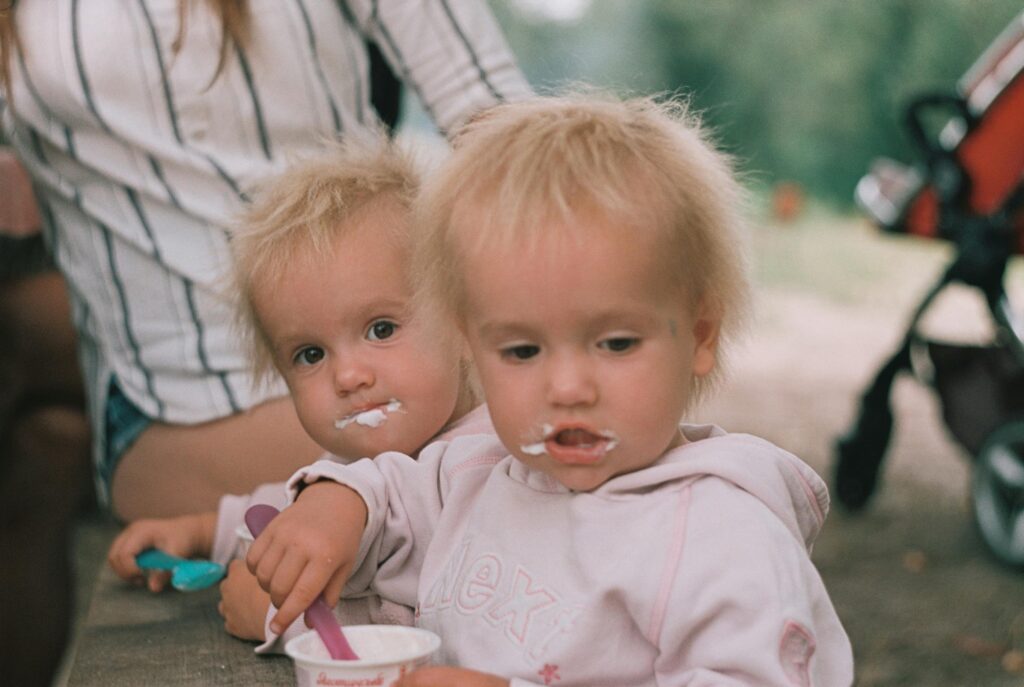
How to Handle a Picky Twin Without Stressing the Other
Here’s where the real strategy comes in — the part that keeps mealtimes calm, fair, and pressure‑free.
1. Serve the same meal, but include a “safe food”
A safe food is something your picky eater reliably accepts — fruit, yogurt, bread, cheese, crackers.
Every plate should include:
- one safe food
- one familiar food
- one exposure food
This keeps meals predictable without catering.
It also prevents the picky twin from feeling overwhelmed and the good eater from feeling restricted.
2. Avoid commenting on who eats what
Toddlers absorb everything.
Avoid:
- “Look, your sister is eating her broccoli.”
- “Why don’t you try it like your brother?”
- “You used to like this.”
Comparison creates pressure. Pressure creates resistance. Resistance creates more pickiness.
Instead, keep the focus on the food, not the behavior.
3. Keep portions tiny — toddler tiny
A tablespoon of a new food is enough.
Small portions feel safe. Large portions feel overwhelming. Tiny portions reduce the pressure to “perform.”
And if they want more? Great. If not? Also fine.
4. Let the good eater eat without guilt
Don’t hold them back. Don’t limit their portions. Don’t make them wait for the picky twin. Don’t apologize for their appetite.
They deserve to enjoy food freely.
And the picky eater deserves to see that eating is enjoyable — not stressful.
5. Use family‑style serving when possible
Put food in the middle and let toddlers choose.
This:
- reduces pressure
- increases autonomy
- encourages curiosity
- removes the “eat this because I put it on your plate” dynamic
Even picky toddlers like feeling in control.
And when they choose something themselves — even a tiny piece — it’s a win.
6. Keep mealtimes short and predictable
Toddlers thrive on rhythm.
Aim for:
- 10–20 minutes
- no grazing
- no pressure
- no bribing
Predictability reduces battles. Short meals reduce overwhelm. Routine builds trust.
7. Protect the picky eater from labels
Avoid:
- “He’s the picky one.”
- “She never eats anything.”
Labels stick. And toddlers grow into them.
Instead try:
- “They’re learning to like new foods.”
- “They take turns being adventurous.”
This keeps the door open for change.
What About Nutrition?
Toddlers don’t eat evenly every day. They eat evenly over time.
If your picky eater:
- has energy
- is growing
- is meeting milestones
- has a few reliable foods
They’re okay.
And if you’re ever unsure, a pediatrician or dietitian can help — but picky eating in toddler twins is extremely common.
Nutrition is a long game, not a single meal.
What Your Twins Will Remember
They won’t remember:
- who ate more
- who refused dinner
- who tried broccoli first
They will remember:
- calm mealtimes
- feeling safe
- feeling respected
- feeling no pressure around food
Your job isn’t to make them eat. Your job is to create a positive environment where eating can happen.
And that environment matters far more than the number of bites they take.
When the Picky Phase Feels Endless
Some picky phases last weeks. Some last months. Some last longer.
But picky eating is rarely permanent.
Most toddlers grow out of it naturally when:
- pressure decreases
- autonomy increases
- exposure stays consistent
- mealtimes stay calm
- development catches up
Your job is not to rush the process — it’s to support it.
When the Good Eater Starts Copying the Picky One
This is extremely common.
Toddlers imitate each other — especially twins.
If your good eater suddenly refuses foods they used to love, stay calm. It’s usually temporary and driven by:
- curiosity
- attention
- sibling dynamics
- wanting sameness
- wanting control
Keep offering variety. Keep meals pressure‑free. Keep your reactions neutral.
Most good eaters return to their baseline once the novelty wears off.
When You’re Emotionally Done With Mealtime Battles
Feeding twins is exhausting. Feeding twins with different eating styles is next‑level exhausting.
You’re not imagining it. You’re not failing. You’re not alone.
It’s okay to:
- simplify meals
- repeat meals
- use frozen foods
- use shortcuts
- serve the same safe foods often
- take breaks from introducing new foods
Your mental health matters too.
If You Want Easy, Realistic Meal Ideas
If you want easy, realistic meal ideas that work for both picky and adventurous toddlers, you can download my free guide, Toddler Meals Made Easy for Twin Parents — it’s designed specifically for twin families navigating different eating styles.
It gives you:
- simple meals
- predictable routines
- low‑pressure strategies
- picky‑eater‑friendly options
- ideas that work for both twins
Because feeding twins shouldn’t feel like a daily emotional marathon.