
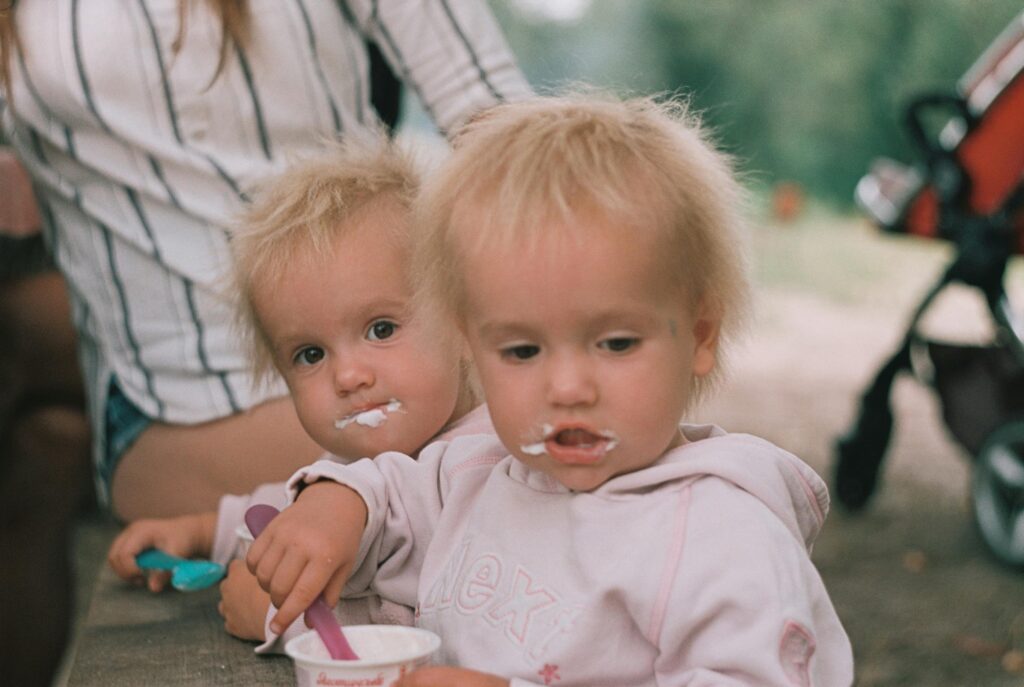
Introducing solids to twins can feel twice as overwhelming. You’re already juggling bottles, naps, and milestones — and now mealtime adds a whole new layer of logistics. Two babies, two readiness levels, two personalities, and one you trying to keep everything moving without losing your mind.
What no one tells you is that introducing solids isn’t just about food — it’s about entering a brand‑new phase of parenting where your twins suddenly become tiny explorers. They’re curious, grabby, easily distracted, and absolutely delighted by the fact that food can be squished, smeared, flung, and tasted. You’re not just feeding them; you’re watching them discover an entire world they didn’t know existed. And yes, that world often ends up on your floor, your shirt, and somehow the back of their heads.
The good news? With a little planning and patience, the transition can be smoother than you expect. Solids don’t have to be complicated or stressful. Think of this stage as exploration, not performance — for your twins and for you. This is the season where your babies get to discover tastes, textures, and the joy of smearing avocado into their eyebrows. It’s messy, chaotic, and surprisingly fun once you stop expecting it to look like the serene baby‑food commercials.
And honestly, those commercials lied. They show a single baby in a spotless high chair, smiling sweetly while a parent gently offers a spoonful of perfectly blended puree. Meanwhile, your reality looks more like two babies banging spoons on trays, one trying to steal the other’s bowl, and you attempting to intercept flying banana chunks like a goalie in the World Cup. But that’s the beauty of twin feeding — it’s unpredictable, hilarious, and full of moments you’ll remember long after the mess is cleaned up.
This stage also marks a shift in how your twins interact with each other. Suddenly, they’re watching each other eat. They’re noticing what the other is doing. They’re copying each other’s reactions — good and bad. If one twin makes a dramatic gag face at peas, the other might immediately decide peas are offensive too. If one twin squeals with delight at yogurt, the other might become curious and lean in. Their dynamic becomes part of the feeding experience, and it’s fascinating to watch.
You’ll also notice how differently each baby approaches food. One might be bold and eager, lunging toward the spoon like they’ve been waiting their whole life for this moment. The other might be cautious, studying the spoon, the bowl, the texture, and your face before deciding whether they’re emotionally prepared to participate. One might love purees. One might prefer finger foods. One might eat quickly. One might take their time. One might be messy. One might be surprisingly neat. Twins rarely approach solids the same way — and that’s okay.
And then there’s you — the parent in the middle of all this discovery. You’re learning too. You’re figuring out how to hold two spoons, how to keep two babies engaged, how to manage two different reactions at once, and how to stay calm when one twin is screaming because the other twin touched their tray. You’re learning how to prep food in a way that doesn’t take all day. You’re learning how to clean up efficiently. You’re learning how to let go of the idea that mealtime needs to be perfect.
You’re also learning how to enjoy it. Because once you stop worrying about doing it “right,” you start noticing the sweetness in the chaos — the way their faces light up when they taste something new, the way they look at each other like they’re sharing a secret, the way they giggle when they accidentally smear food on themselves, the way they reach for your hand with sticky fingers.
Introducing solids to twins is messy, yes. But it’s also one of the first stages where you get to see their personalities shine in a whole new way. You get to see their curiosity, their preferences, their reactions, and their independence. You get to see them learn. You get to see them grow. You get to see them enjoy something that isn’t just milk or sleep or snuggles — something brand new.
When to Start Solids
Most babies are ready for solids around six months, though some may show signs as early as 4–5 months. What matters most is readiness, not age. Look for:
- good head and neck control
- ability to sit with minimal support
- interest in food (watching you eat, reaching for food)
- diminished tongue‑thrust reflex
With twins, it’s extremely common for one baby to show readiness before the other. One might be grabbing at your plate while the other still seems unsure. That’s normal. You can introduce solids at each baby’s pace — they don’t have to start on the same day.
And if one twin is ready earlier, it doesn’t mean the other is “behind.” Twins develop on their own timelines. You might have one adventurous eater and one cautious observer. You might have one baby who lunges toward the spoon and one who looks at it like you’re offering them a tax form. Both are normal.
Some parents worry that starting one twin earlier will create a long‑term difference in eating habits. It won’t. What matters is that each baby feels safe, supported, and unpressured. Solids are a sensory experience first, a nutritional one later.
How to Get Started
Introduce one new food at a time
Offer a single food for 2–3 days before adding another. This makes it easier to spot allergies or sensitivities. With twins, this slow pace is even more helpful — you’re tracking reactions for two babies, not one.
Start with simple textures
Purees of single vegetables, fruits, or iron‑fortified cereals are great first foods. If you’re doing baby‑led weaning, soft, graspable pieces work too. Many twin parents use a hybrid approach because it’s flexible and easier to manage when you’re feeding two babies at once.
Offer small amounts
A few teaspoons is plenty. The goal is exposure, not intake. Most of their nutrition still comes from breastmilk or formula. If one twin eats more than the other, that’s okay. If one twin refuses everything, that’s okay too. Early solids are not a competition.
Expect mess — lots of it
Babies learn through touch, squishing, smearing, and dropping. Bibs, wipes, and a washable surface will save your sanity. Twins often escalate the mess because they copy each other — if one discovers that smacking the spoon makes a fun splatter, the other will absolutely join in.
Once you start solids, meal prep becomes more important — see Quick Toddler Meals for easy ideas that help you stay ahead on busy days.
Feeding Twins Together
Feeding twins at the same time has its pros and cons, and both are worth considering. Some parents prefer feeding one at a time to reduce stress. Others find simultaneous feeding easier because it keeps the routine consistent. There’s no right answer — only what works for your family.
Pros
- saves time
- helps establish predictable mealtime routines
- twins often mimic each other, which can increase willingness to try new foods
Cons
- one baby may dominate your attention
- different appetites or readiness levels can cause frustration
- one may finish quickly while the other needs more time
Tips for smoother twin mealtimes
- Use separate high chairs to prevent grabbing or competition.
- If one refuses food, offer again later rather than forcing.
- Keep the atmosphere calm — your energy sets the tone.
- Focus on the process, not perfection. Exposure is the goal.
Feeding twins together also means learning how to divide your attention without feeling guilty. You might spend more time helping the slower eater while the faster eater waits. You might need to alternate spoonfuls. You might need to pause one baby’s meal to help the other. This is normal twin feeding — messy, imperfect, and totally doable.
Managing Allergies and Reactions
Introducing solids to twins means double the tracking, but it doesn’t have to be complicated.
- Introduce foods one at a time.
- Keep a simple log of what each baby eats and any reactions.
- Contact your pediatrician if you notice rashes, vomiting, swelling, or breathing changes.
Most reactions are mild, but it’s always better to track and stay aware. And remember: if one twin reacts to a food, it doesn’t automatically mean the other will. Twins share DNA, not immune systems.
Some parents worry about introducing allergenic foods like peanut butter or eggs. Talk to your pediatrician if you’re unsure, especially if allergies run in your family. But in most cases, early introduction is safe and beneficial.
Quick Toddler Meals to Keep You Sane
Even with careful planning, some days are just hard. Maybe one twin refuses solids, the other is distracted, and mealtime stretches endlessly. That’s when having a list of simple, reliable toddler meals saves your day.
My free guide, Quick & Healthy Toddler Meals, includes:
- fast, kid‑approved meals
- minimal ingredients
- ideas that work even on refusal days
It’s perfect for parents juggling twins or multiple toddlers — and it helps reduce stress when you don’t have time for elaborate prep.
And here’s the truth: even if you’re introducing solids now, toddler meals will matter sooner than you think. The habits you build now — simple prep, predictable routines, low‑pressure exposure — will make toddler feeding easier later.
Tips to Keep It Simple
- Keep a stash of ready‑to‑serve purees or soft foods.
- Use small spoons and shallow bowls to make early self‑feeding easier.
- Make feeding a routine — offering solids at the same time each day helps.
- Be patient. It’s normal if one baby takes longer to accept solids than the other.
- Follow their cues — leaning forward, opening their mouth, turning away, or pushing food out all tell you something.
Keeping it simple also means lowering your expectations. Some days your twins will eat beautifully. Some days they’ll reject everything. Some days they’ll smear yogurt into their hair and laugh. Some days they’ll cry because the banana touched the plate. This is all normal.
Focus on Enjoyment, Not Intake
The first months of solids aren’t about nutrition. Breastmilk or formula still provides most of your twins’ calories. Your real goal is:
- familiarity
- exploration
- sensory experience
- positive associations with food
Make mealtime interactive and low‑pressure. Babies who enjoy food early are more likely to eat well later. Let them touch the food. Let them explore. Let them make a mess. Let them take their time. You’re building comfort, not consumption.
And remember: twins often influence each other. If one twin enjoys a food, the other may become curious. If one twin refuses, the other might still try. Their dynamic will shift constantly — and that’s part of the fun.
When to Seek Guidance
Reach out to your pediatrician if:
- one or both twins aren’t gaining weight adequately
- you see severe reactions to new foods
- you’re unsure about texture progression
- you’re worried about choking risk
Otherwise, stay consistent, flexible, and calm. Solids are a journey, not a race.
The Takeaway
Introducing solids to twins is more manageable when you have preparation, patience, and a few simple systems in place. Focus on exposure, observation, and enjoyment — not perfection. Your twins will learn at their own pace, and you’ll find your rhythm too.
And remember: you’re not just feeding two babies. You’re teaching them how to explore, taste, touch, and enjoy food. You’re building habits that will support them for years. You’re doing an incredible job — even on the messy days.
Some days will be messy. Some days, your babies may refuse everything. But with strategies and a ready list of quick toddler meals like my free guide, mealtime can feel calmer, faster, and more manageable for everyone.